The project concerns the new Rifò store in Milan, located at Piazza Wagner 11. The intervention is developed in coherence with the brand’s principles, based on reuse, waste reduction, and attention to material life cycles, within a limited budget of €30.000.
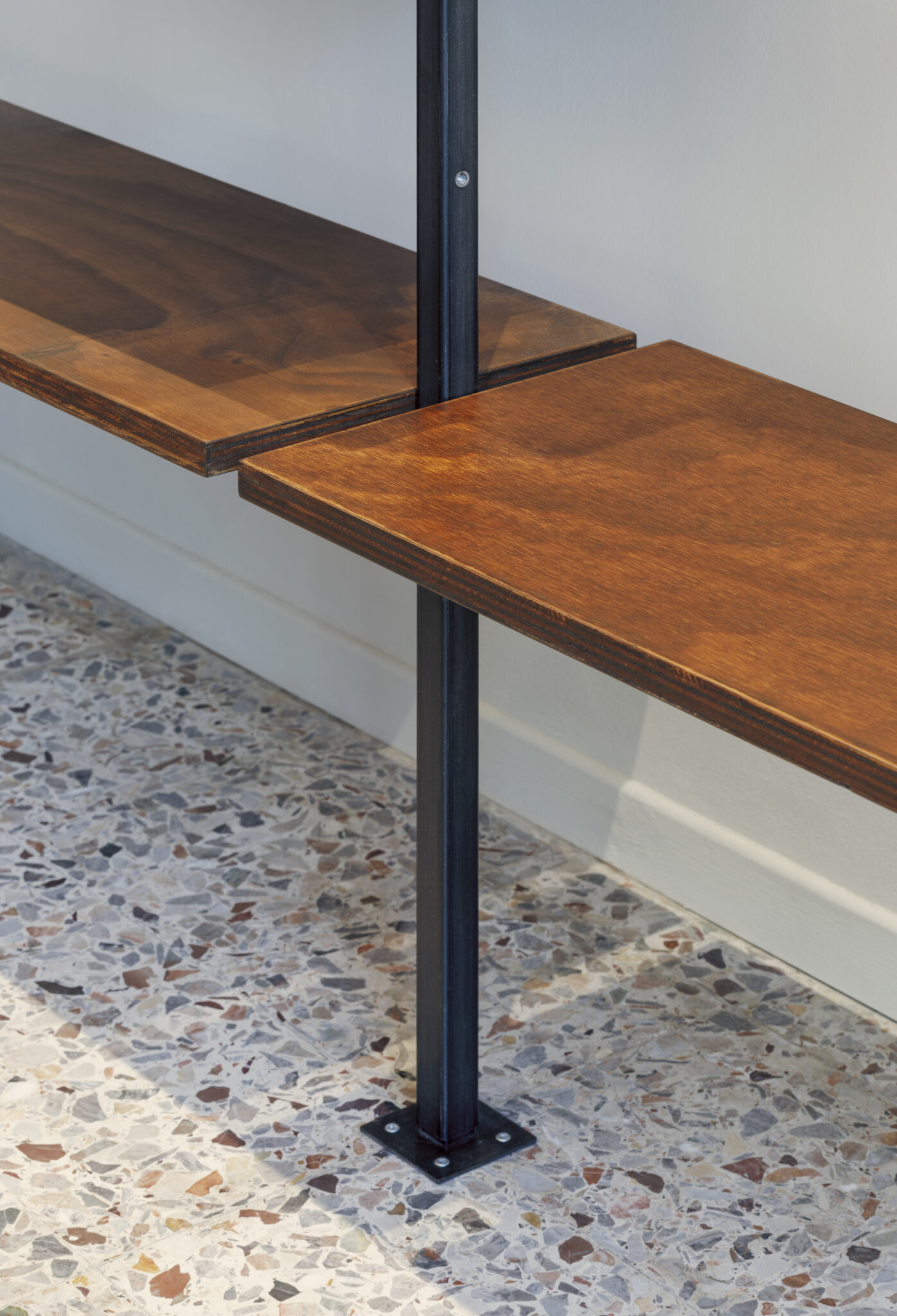
The project takes shape starting from the existing space. During the construction phases, the removal of the PVC flooring revealed a historic terrazzo floor of the building, which was subsequently restored and adopted as the generative element of the new layout. The terrazzo flooring thus becomes a material and compositional matrix, capable of establishing continuity between the original character of the space and the contemporary intervention.
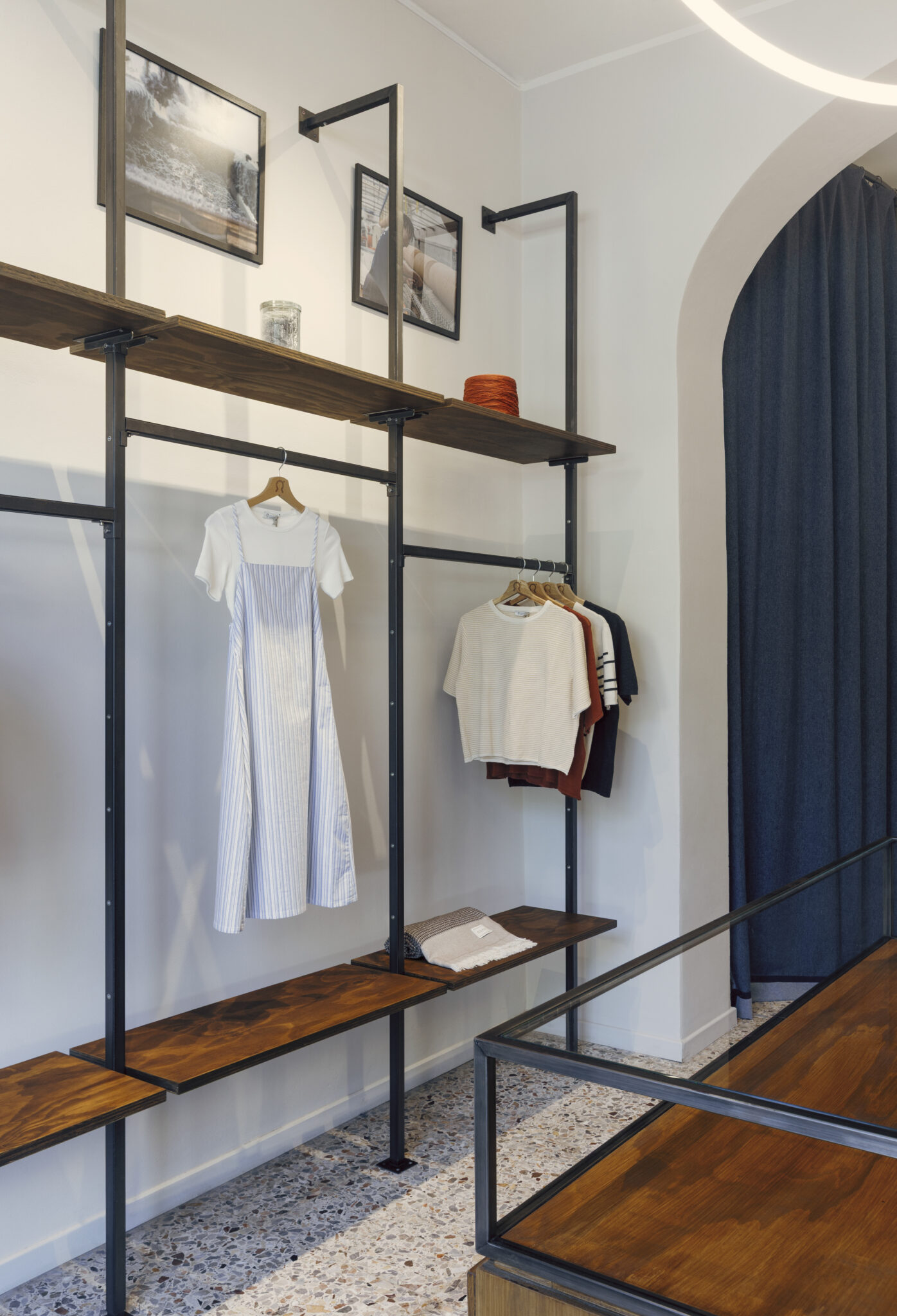
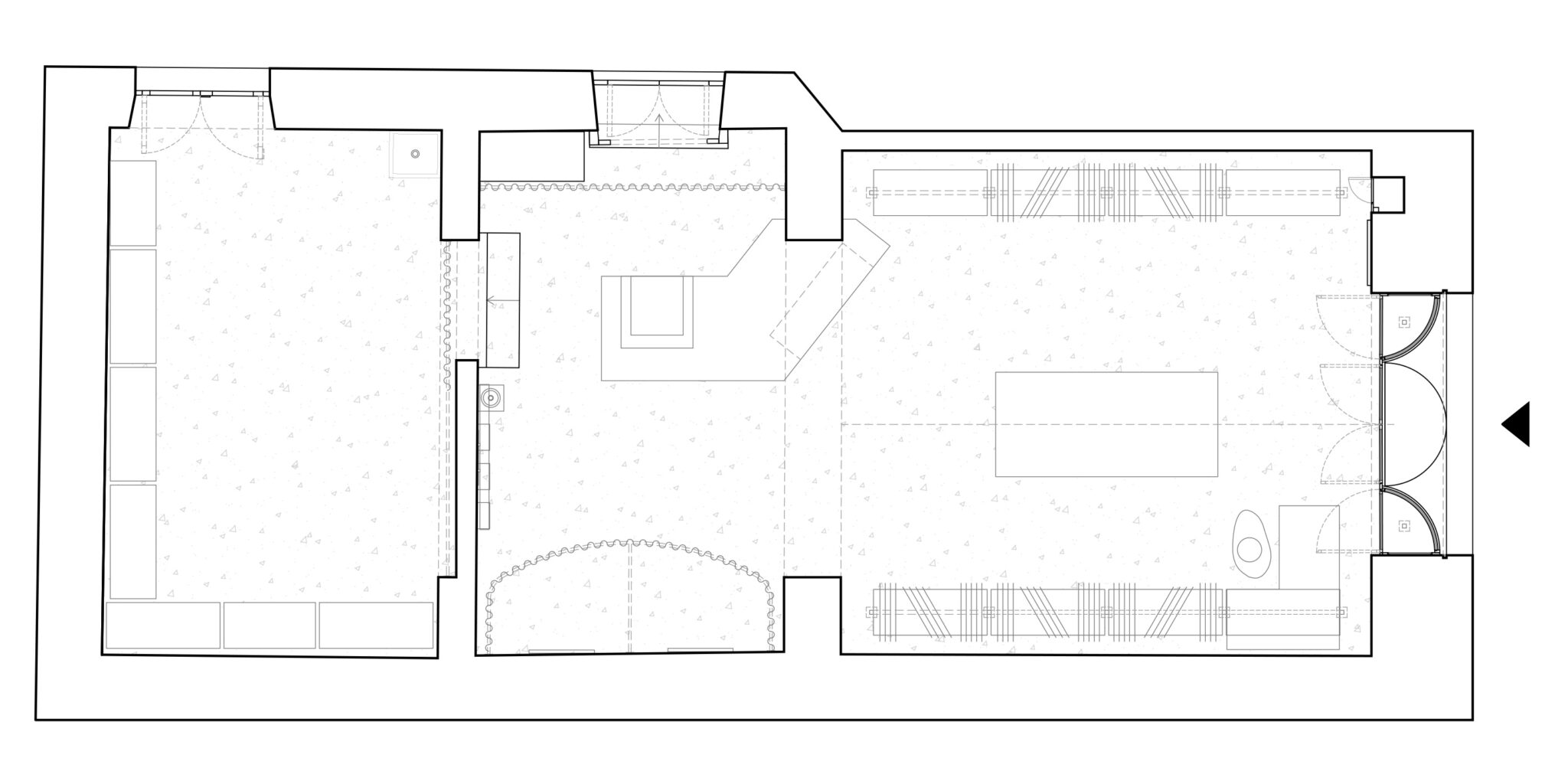
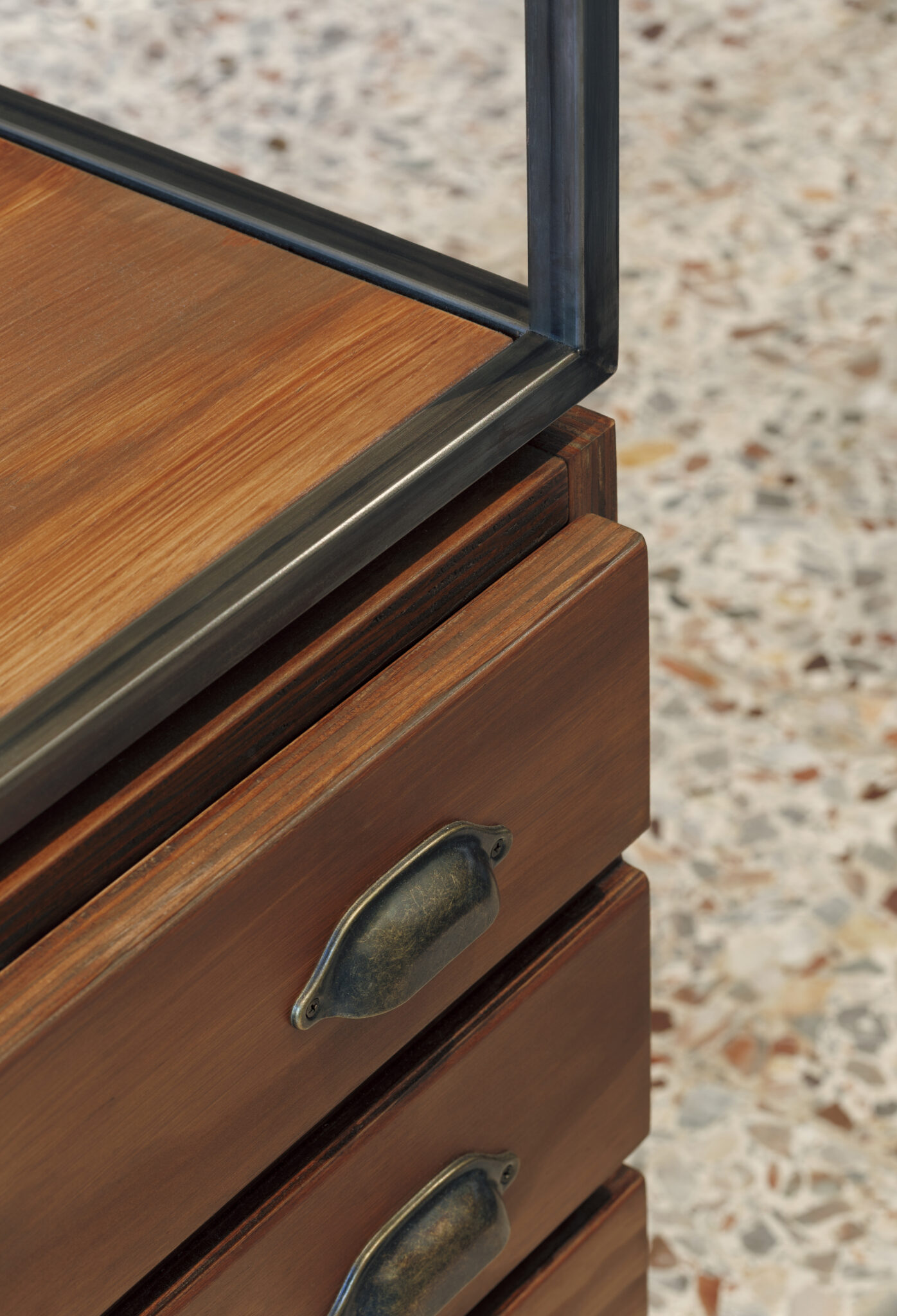
The internal layout is organized into two consecutive rooms, defined by a clear and legible sequence. The first space is structured around a symmetrical arrangement, with a central counter that shapes its perception and organizes its use. The proportions and design recall a 1960s-inspired language, reinterpreted in an essential way. The second room naturally continues the spatial sequence and houses the checkout, positioned at the back as the concluding point of the space.
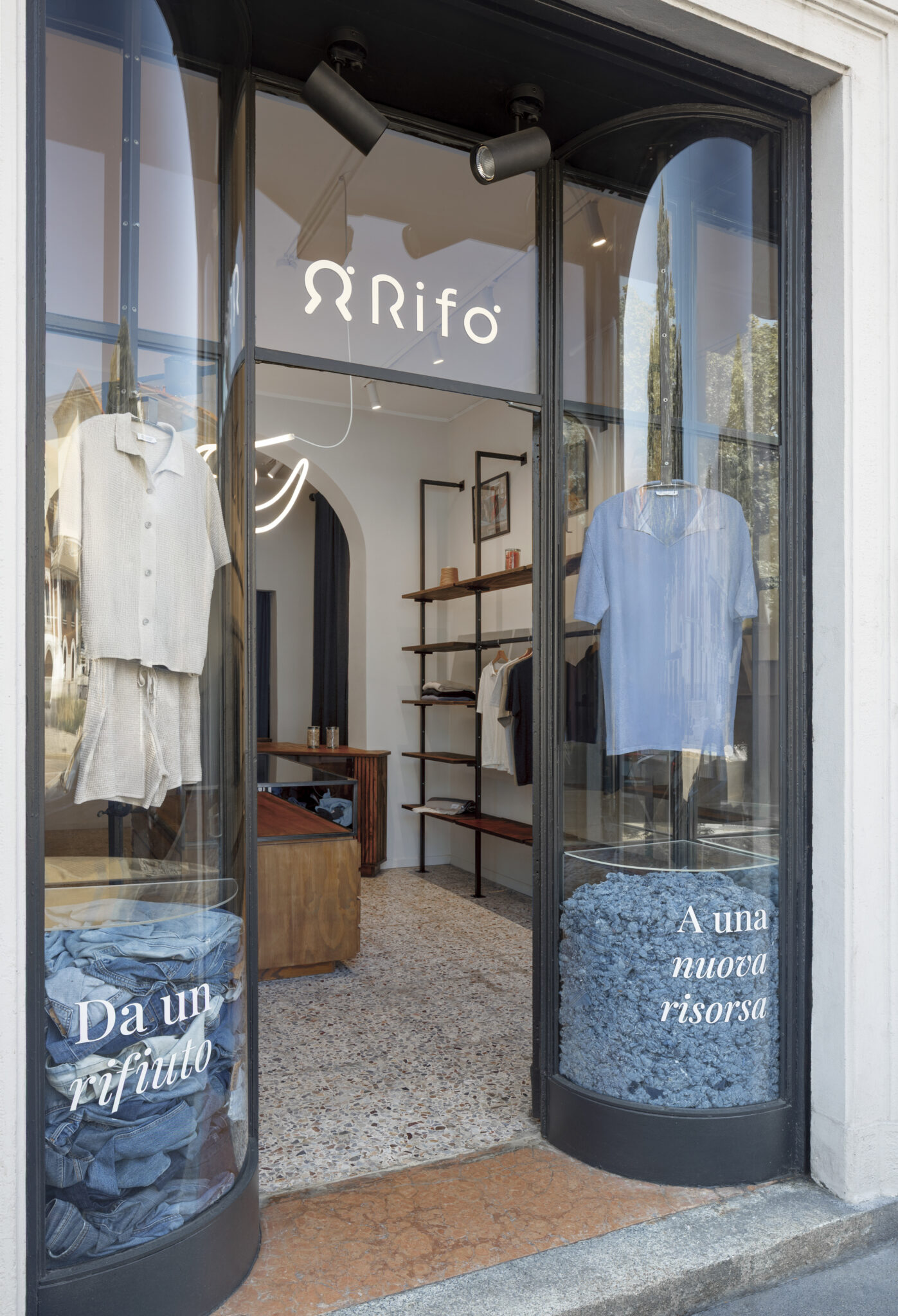
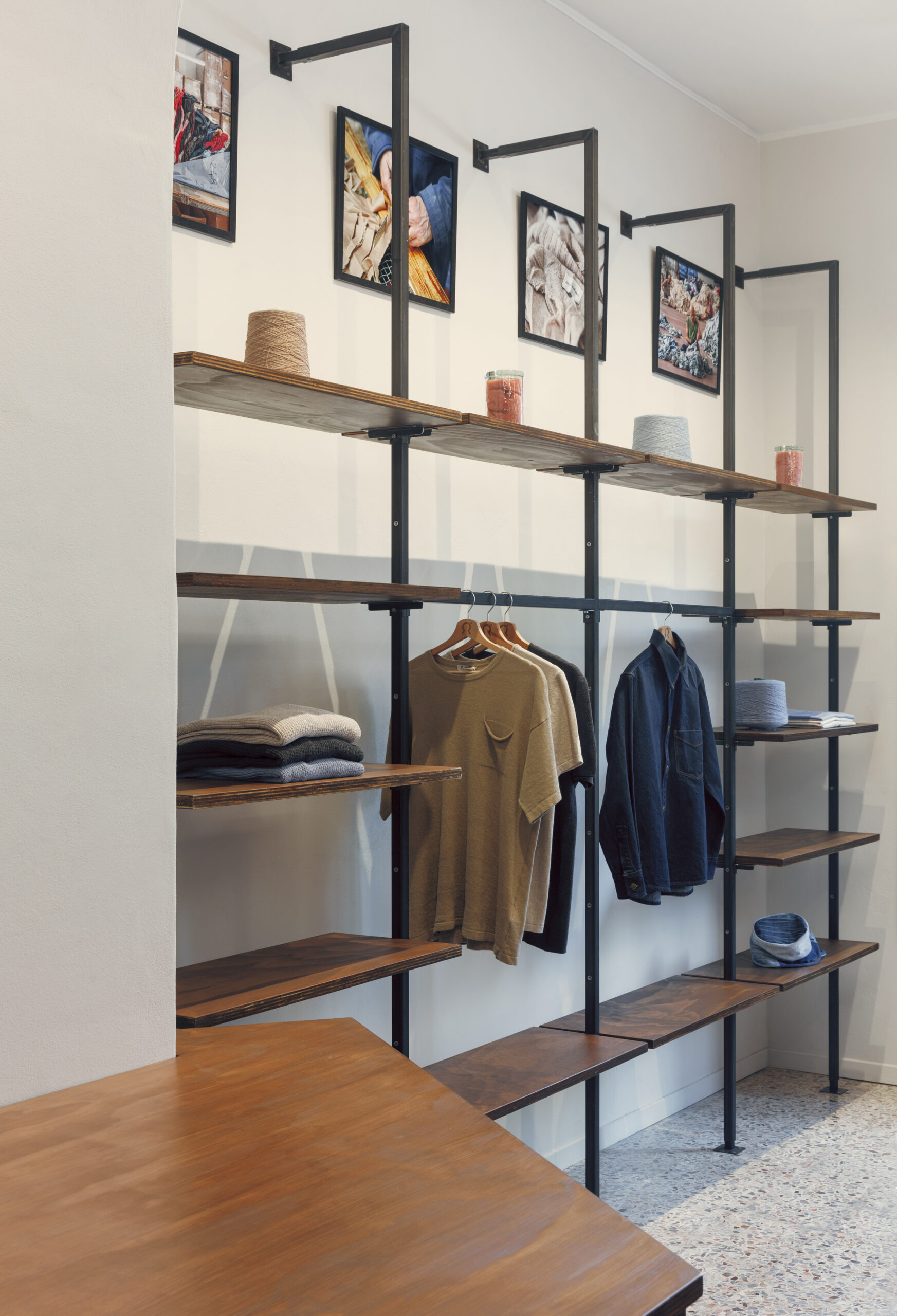
The furnishings are reduced to a few elements, designed with simple geometries and neutral surfaces, conceived to accompany the space without overlapping its identity. The intervention works by subtraction, allowing the quality of the existing elements to emerge and creating a balance between presence and absence.
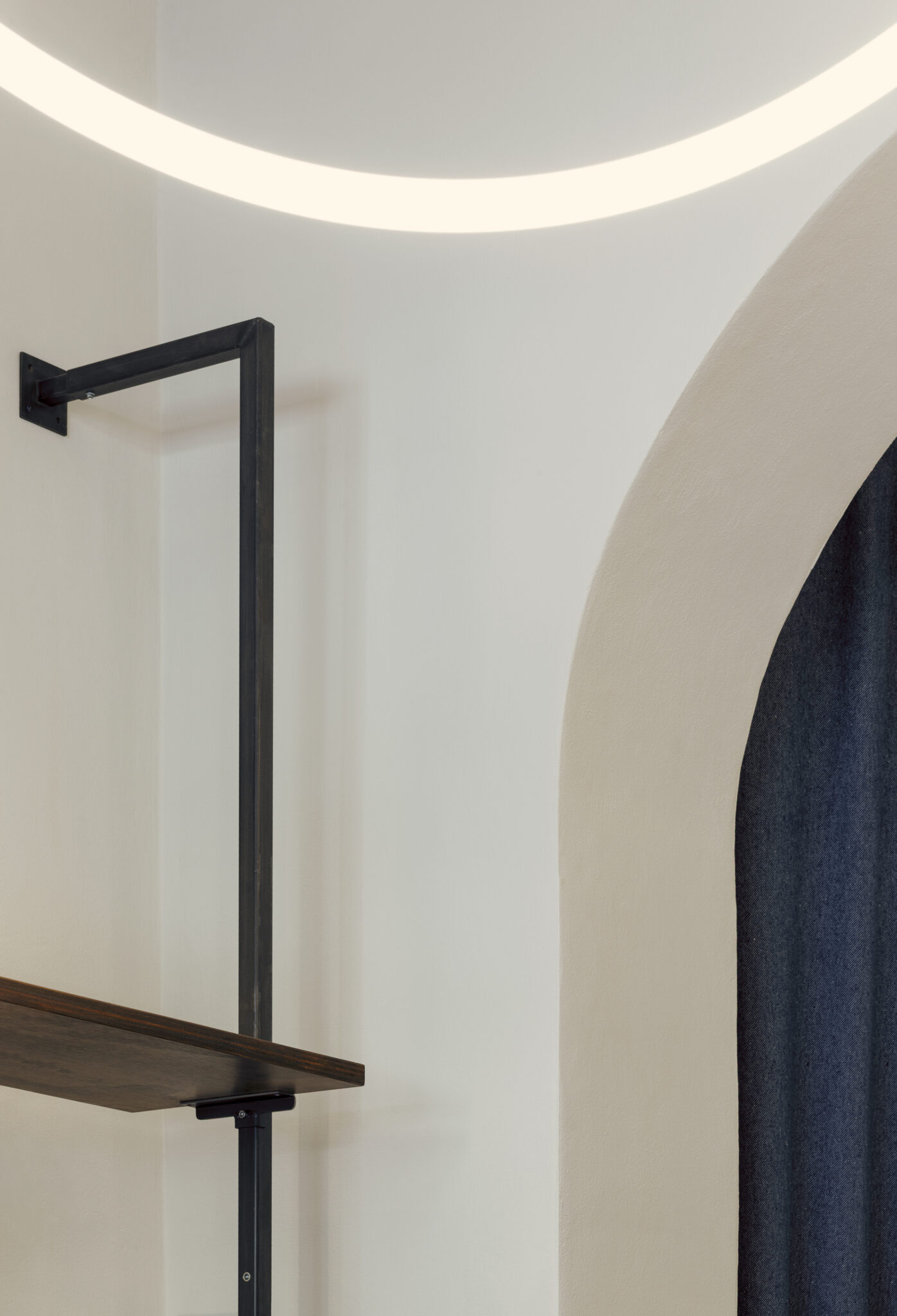
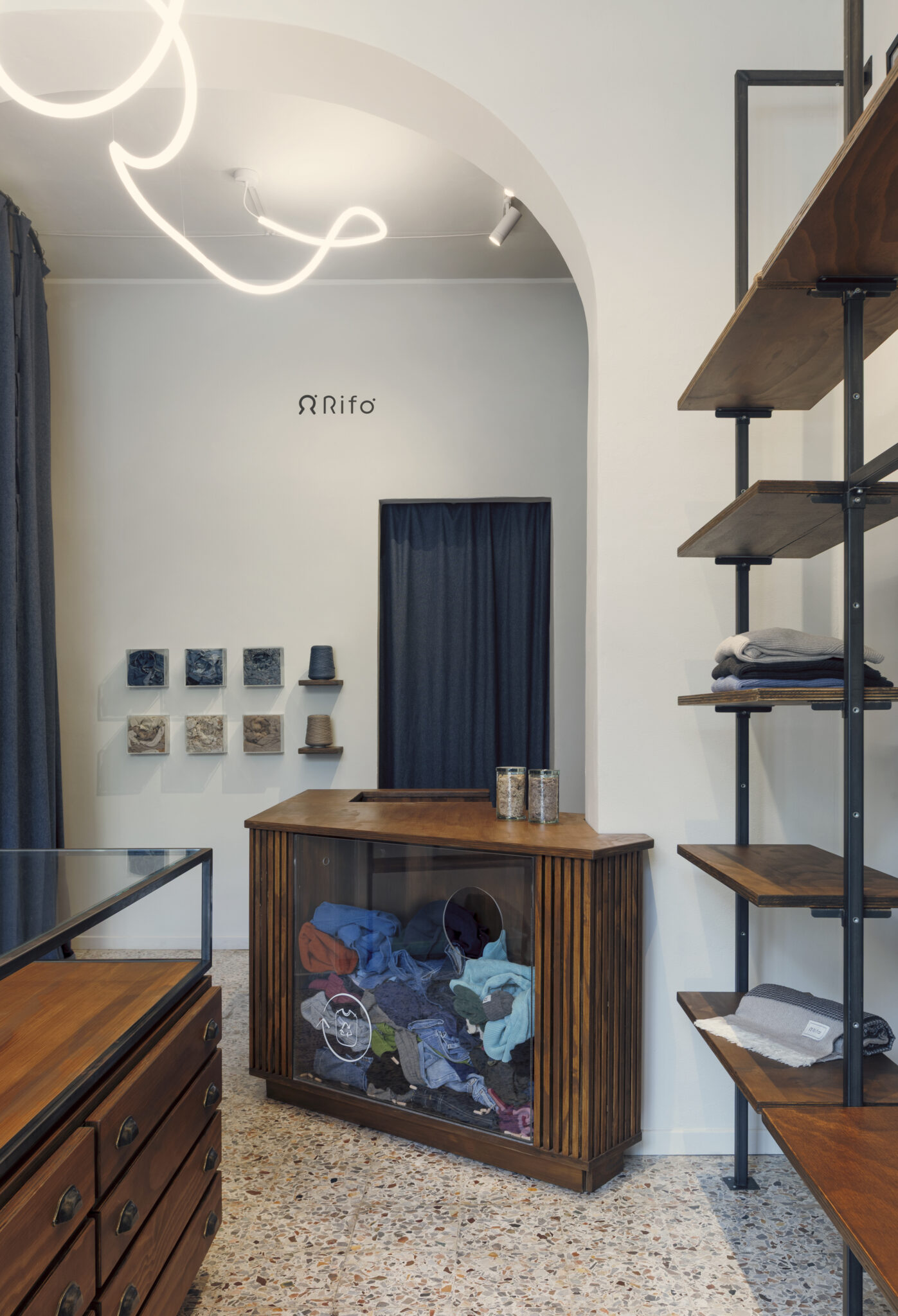
Light plays an active role in defining the project. A continuous line created with a flexible LED runs through the spaces and extends outward, establishing a direct relationship with the urban environment. This linear element, visible from the street, acts as a device for orientation and recognition, synthesizing the character of the store in a minimal form.
The intervention is constructed through precise and controlled operations, in which reuse becomes a design tool. The economic constraint is embraced as an integral part of the process, contributing to the definition of an essential, coherent, and measured space.